HomeShielders Pest Control logoHomeShielders Pest Control
Fast, upfront pest control service in Fort Worth, TX, free quote in minutes

Pest Control Service Fort Worth

Pest control service in Fort Worth provides homeowners and property managers with perimeter defense protocols, interior non-volatile treatments, and precision exclusion barriers against native Texas infestations. Initial on-site diagnostic assessments start at a baseline of $250, identifying subterranean entry vectors, attic nesting voids, and roofline access passages common to Tarrant County properties.
Get your free pest control service quote, Fort Worth

We only use your ZIP to check availability, no spam.

Subterranean Termite Soil Treatment and MonitoringRoof Rat and Rodent Structural ExclusionQuarterly Perimeter Pest Barrier Maintenance
Pest Control Service in Fort Worth, TX
Pest Control Servicein Fort Worth, TX

What is Pest Control Service in Fort Worth, TX?

Pest control service in Fort Worth is a targeted biological management and structural defense procedure that eliminates active insect or vertebrate colonies, sanitizes contaminated sub-spaces, and seals building envelopes across North Texas residential architecture.

Why Fort Worth homeowners choose HomeShielders Pest Control

  • Subterranean termite swarms consistently surge between March and May following early spring rainfall events across Fort Worth soils.
  • Mosquito suppression and fire ant yard treatments peak in demand from May through September across Tarrant County yards.
  • Roof rat, mouse, and overwintering pest exclusion spikes between late October and December as temperatures cool down toward the Trinity River basin.
  • All full-scale diagnostic evaluations and targeted curative remediation protocols begin at a verified on-site minimum rate of $250.
Subterranean Termite Soil Treatment and Monitoring
Roof Rat and Rodent Structural Exclusion
Quarterly Perimeter Pest Barrier Maintenance
Our Expertise

Pest Control Service services in Fort Worth

Every service reflects the same meticulous attention to detail, whether it's a single job or a larger pest control service project across Fort Worth.
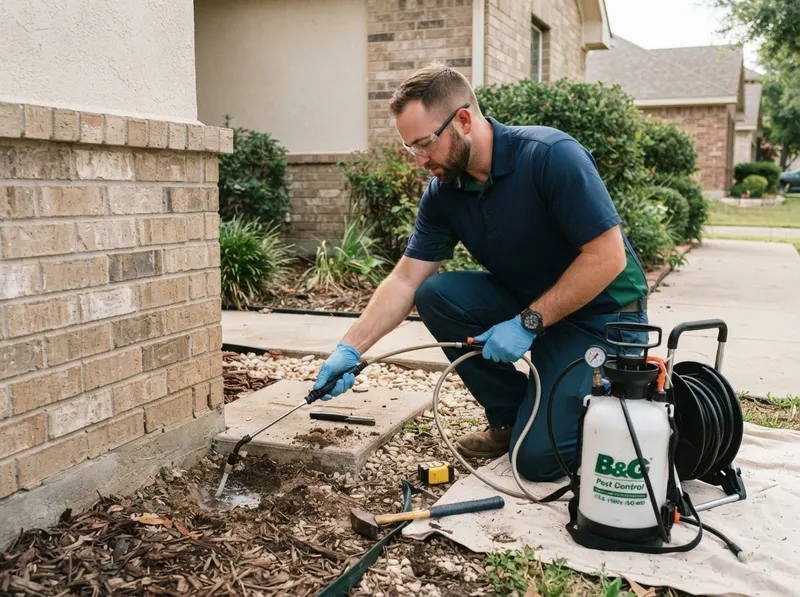
Subterranean Termite Soil Treatment and Monitoring in Fort Worth, TX

Subterranean Termite Soil Treatment and Monitoring

Subterranean termite soil treatment applies liquid termiticide trenches along concrete slab perimeters and inserts subterranean bait stations every 10 to 15 linear feet around residential structures. This protocol halts eastern subterranean termites (Reticulitermes flavipes) moving upward through shrinkage cracks and foundation plumbing penetrations common in North Texas clay soils, establishing continuous chemical barriers that eliminate active colonies within 30 to 90 days. Technicians excavate continuous 6-inch by 6-inch soil trenches directly against exterior grade beams, injecting non-repellent active ingredients such as fipronil at a regulated rate of 4 gallons per 10 linear feet. When foundations feature abutting concrete driveways, flat patios, or brick walkways, technicians drill vertical 0.5-inch access holes spaced 12 inches apart through the flatwork, pressure-injecting liquid termiticides into the sub-slab aggregate before sealing each injection port with hydraulic cement plugs.

Get a quote →
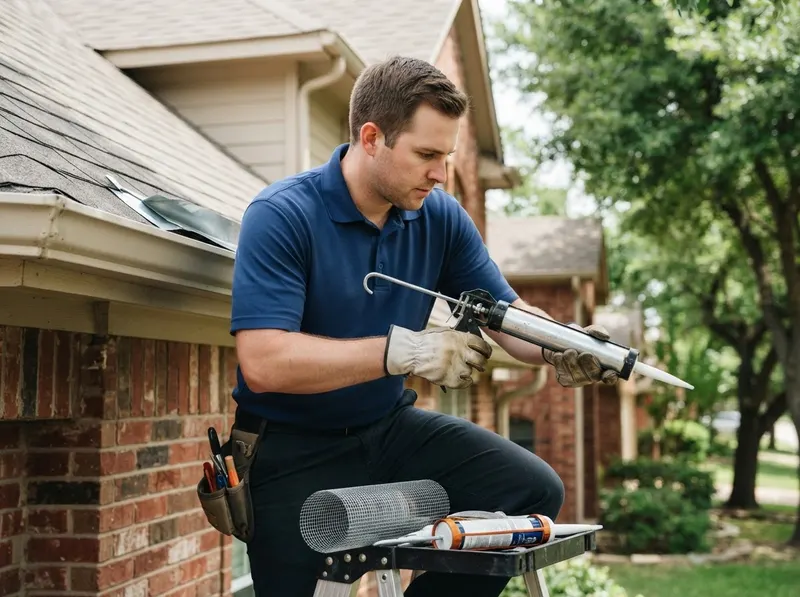
Roof Rat and Rodent Structural Exclusion in Fort Worth, TX

Roof Rat and Rodent Structural Exclusion

Roof rat and rodent structural exclusion seals architectural breaches larger than 0.25 inches across roof intersections, fascia lines, attic louver vents, and crawl space foundations. Heavy-gauge galvanized hardware cloth, copper mesh, and industrial elastomeric caulking prevent Rattus rattus and Mus musculus from entering attic spaces, followed by multi-day mechanical snap trapping and antimicrobial droppings remediation starting at $250. Technicians systematically inspect high-stress roof junctures including rake-edge transitions, dormer tie-ins, ridge vent caps, and unbacked frieze board channels. Interior remediation measures utilize closed-cell containment systems to remove localized rodent fecal contamination, vacuuming nesting insulation with HEPA-rated equipment that captures 99.97% of bio-contaminants at 0.3 microns, followed by an atomized quaternary ammonium misting treatment across timber joists to eliminate pheromone trails and ectoparasites.

Get a quote →
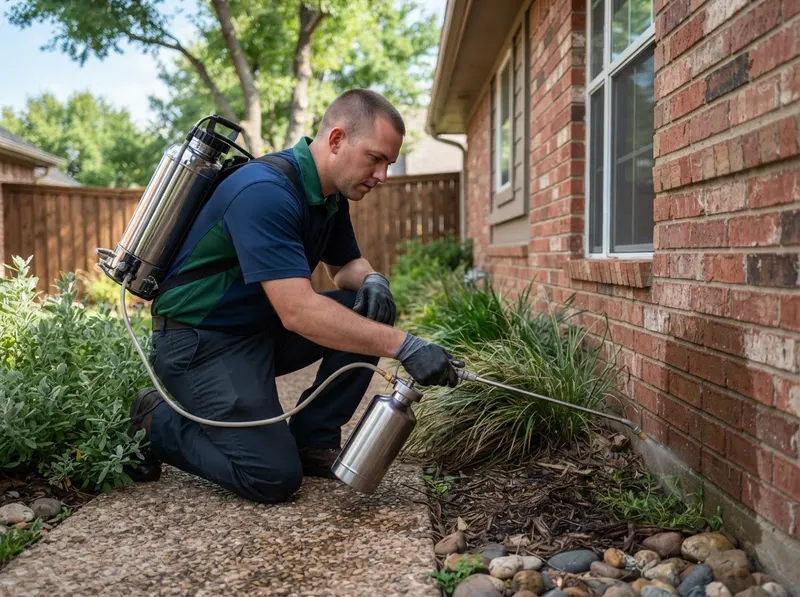
Quarterly Perimeter Pest Barrier Maintenance in Fort Worth, TX

Quarterly Perimeter Pest Barrier Maintenance

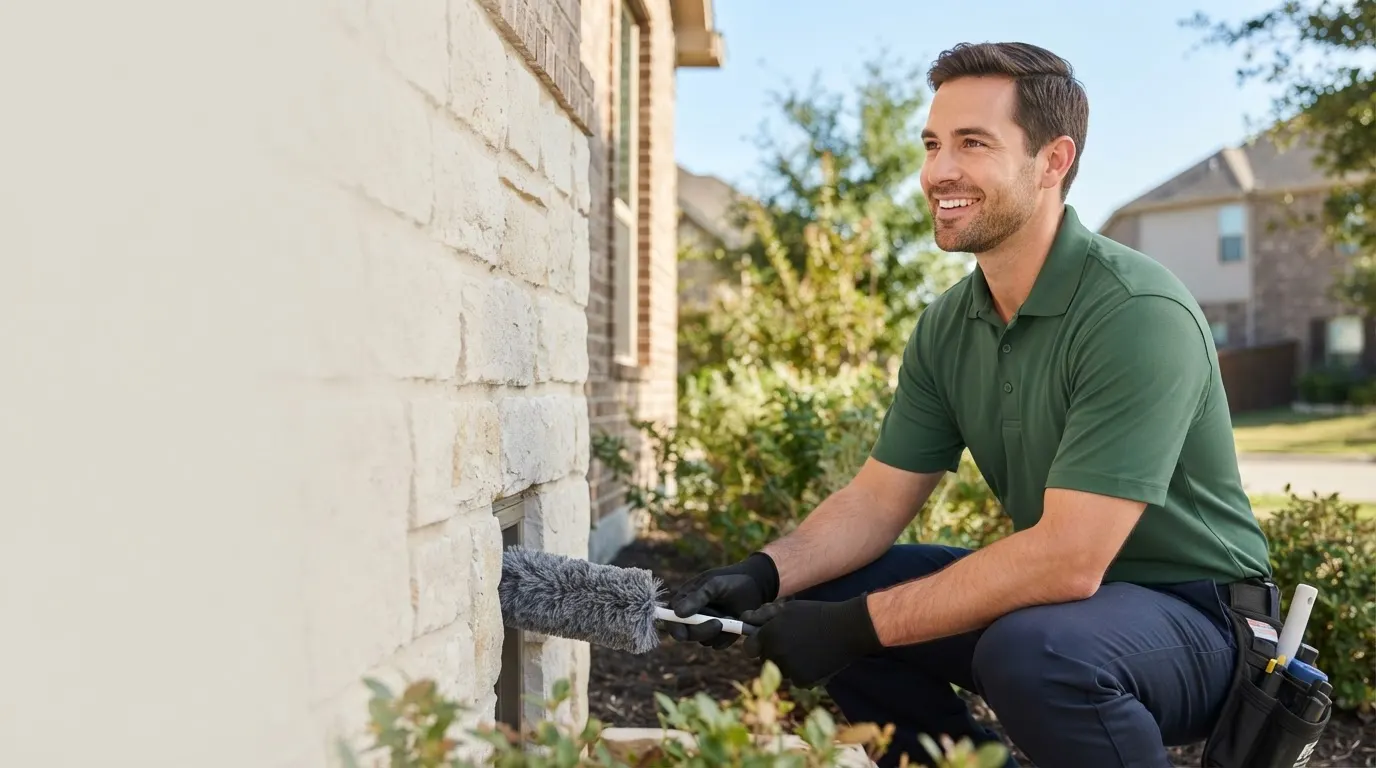
Quarterly perimeter pest barrier maintenance establishes a 3-foot vertical and 6-foot horizontal non-repellent exterior perimeter band around slab foundations to prevent crawling insect ingress. The protocol targets smokybrown cockroaches, American roaches, field crickets, and centipedes using micro-encapsulated active ingredients that resist breakdown from 100-degree summer heat cycles and intense solar exposure across Tarrant County. Field technicians sweep exterior eaves, window crowns, and soffit channels up to 20 feet using telescoping extension poles, removing spider webs, insect egg sacs, and mud dauber nests to interrupt biological reproductive cycles. In addition to the liquid perimeter buffer, service visits incorporate water-resistant granular baits distributed across adjacent rock landscaping beds, mulch layers, and groundcover vegetation, neutralizing perimeter foraging pockets before insects cross structural exterior door thresholds.

Get a quote →
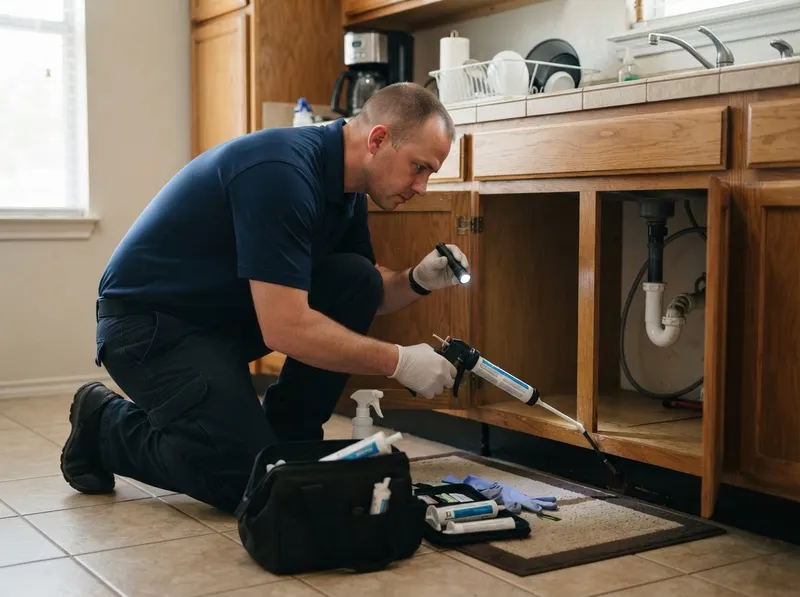
Targeted Indoor Cockroach Remediation in Fort Worth, TX

Targeted Indoor Cockroach Remediation

Targeted indoor cockroach remediation treats localized infestations of Blattella germanica within residential kitchens, utility rooms, and food prep areas using precision gel baits, insect growth regulators (IGRs), and dry particulate void dusts. Technicians avoid broadcast chemical sprays, placing non-volatile formulations inside hinge pockets, under appliance motor housings, and around pipe escutcheons to halt reproductive cycles safely around domestic living spaces. Gel baits formulated with abamectin or indoxacarb leverage horizontal transfer properties, allowing contaminated nymphs and adults to spread active ingredients to harbored populations hidden deep within drywall assemblies. Dry inorganic dusts, such as amorphous silica gel, are applied through precision hand bellows into pipe penetrations behind dishwashers, sinks, and laundry standpipes, compromising the insect epicuticle through desiccation without releasing airborne odors or chemical residues into kitchen prep zones.

Get a quote →
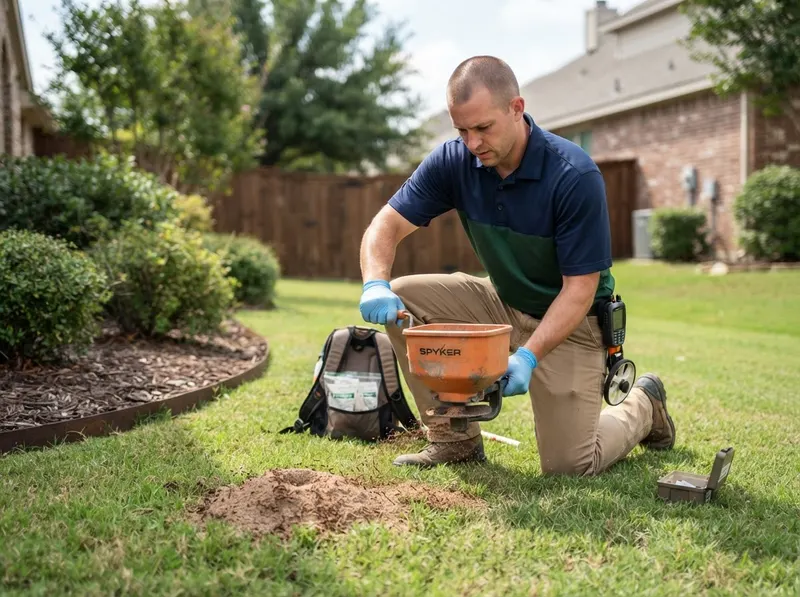
Imported Fire Ant Turf Management in Fort Worth, TX

Imported Fire Ant Turf Management

Imported fire ant turf management utilizes dual-action broadcast bait formulations containing abamectin or hydramethylnon combined with individual mound contact treatments across residential lawn acreages. This service achieves colony collapse across expansive Tarrant County residential yards, preventing painful stings around family outdoor gathering zones and halting electrical utility equipment damage caused by Solenopsis invicta. Technicians calibrate broadcast spreaders to distribute microscopic bait granules at specific field densities across open turf, shaded shrub borders, and foundation perimeters during active foraging windows when surface soil temperatures register between 70 and 90 degrees Fahrenheit. For sensitive structural elements, including HVAC compressor disconnects, ground-mounted transformer boxes, and landscape lighting junctions, technicians apply specialized dry non-conductive insecticidal formulations that eliminate electrical short-circuiting risks caused by swarming worker clusters.

Get a quote →
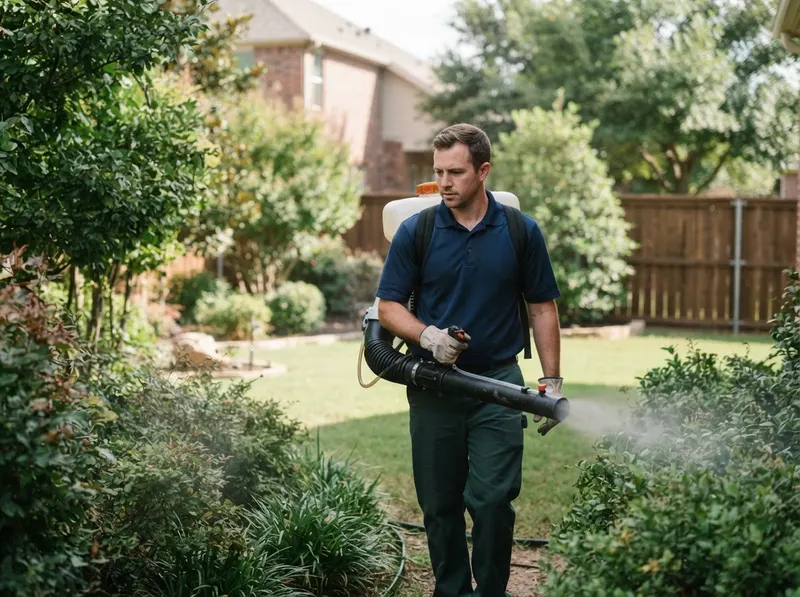
Seasonal Mosquito Barrier Fogging and Larvicide in Fort Worth, TX

Seasonal Mosquito Barrier Fogging and Larvicide

Seasonal mosquito barrier fogging uses botanical pyrethrin mists on lower tree canopies, broadleaf vegetation, shaded perimeter fences, and drainage paths where Culex and Aedes mosquitoes harbor during daytime heat. Technicians treat non-draining water accumulation, retention basins, and decorative ponds with biological Bacillus thuringiensis israelensis (BTI) dunks to destroy aquatic larvae before adult emergence. Ultra-low volume (ULV) atomizing backpack misters disperse microscopic droplet spectrums measuring 15 to 30 microns, allowing active formulations to adhere to the undersides of dense foliage without running off into storm water channels. Technicians evaluate property drainage routes, inspecting downspout catch basins, French drain cleanouts, corrugated gutter discharge pipes, and shaded air conditioning condensation drip lines, applying slow-release insect growth regulator briquettes that prevent larval maturation in stagnant water reservoirs for up to 30 continuous days.

Get a quote →
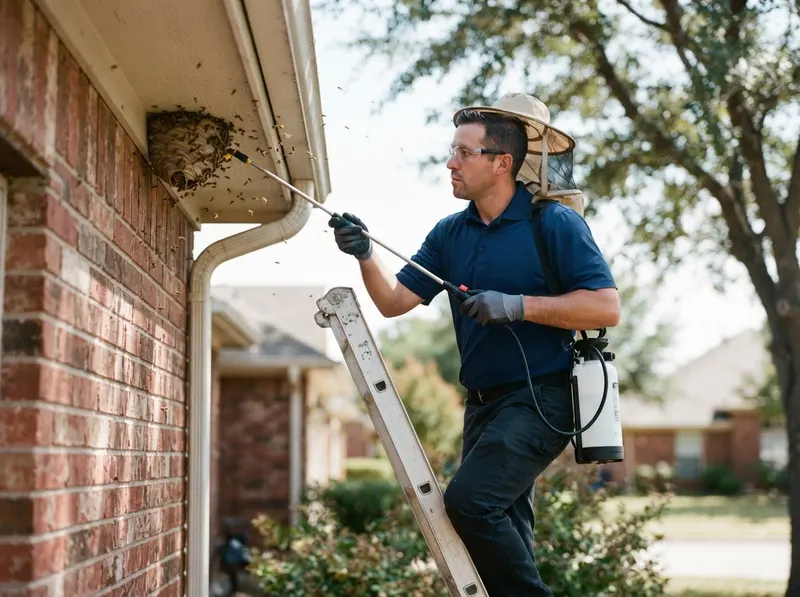
Stinging Insect and Paper Wasp Colony Removal in Fort Worth, TX

Stinging Insect and Paper Wasp Colony Removal

Stinging insect and paper wasp colony removal neutralizes aerial Polistes paper wasp nests, aggressive yellowjacket ground cavities, and European hornet aggregations beneath second-story soffits, patio overhangs, and playsets. Technicians deploy telescoping precision aerosol injectors and protective suits to mechanically dislodge nesting structures and apply residual contact repellents to prevent rebuilds on high-activity architectural points. For subterranean yellowjacket colonies nesting in abandoned rodent burrows or cracked landscape berms, service teams deploy directional root-injection equipment to saturate subterranean nest galleries with fast-acting, non-repellent liquid agents, preventing counter-attacks. Following total colony neutralization, technicians physically remove hanging carton paper structures, apply solvent cleaners to dissolve lingering orientation scent pheromones, and treat attachment brackets with micro-encapsulated contact deterrents to inhibit re-nesting attempts.

Get a quote →
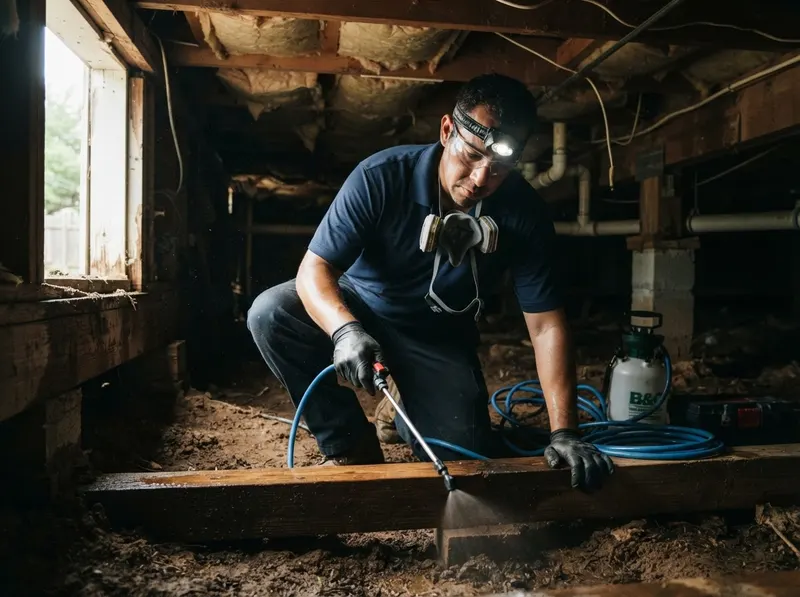
Crawlspace and Pier-and-Beam Moisture Pest Remediation in Fort Worth, TX

Crawlspace and Pier-and-Beam Moisture Pest Remediation

Crawlspace and pier-and-beam moisture pest remediation resolves damp sub-floor insect harborages beneath historic Fort Worth bungalow residences. Technicians combine poly vapor retarders, specialized borate wood treatments against wood-boring powderpost beetles, and focused dust dispersal inside unexcavated underfloor cavities to deter silverfish, camel crickets, and carpenter ants attracted to localized moisture decay. Technicians assess sub-floor framing members with electronic pin-type moisture meters, documenting wood moisture equivalent (WME) levels exceeding 20% that foster fungal growth and structural degradation. Treatments incorporate high-output directional air blowers to dry target framing zones, followed by the topical spray application of water-soluble disodium octaborate tetrahydrate (DOT) solutions onto sill plates, floor joists, and subfloor decking, yielding a permanent subterranean pest and fungal barrier that protects historical framing integrity.

Get a quote →
The essentials

What Fort Worth customers should know

  • Subterranean termite swarms consistently surge between March and May following early spring rainfall events across Fort Worth soils.
  • Mosquito suppression and fire ant yard treatments peak in demand from May through September across Tarrant County yards.
  • Roof rat, mouse, and overwintering pest exclusion spikes between late October and December as temperatures cool down toward the Trinity River basin.
  • All full-scale diagnostic evaluations and targeted curative remediation protocols begin at a verified on-site minimum rate of $250.
  • Physical entry-point exclusion utilizing metal flashing, wire mesh, and elastomeric sealants provides permanent protection compared to surface chemical spraying alone.
The HomeShielders Pest Control standard

Why Fort Worth keeps calling us back

01

A clear, written price

You get a firm, itemized quote for your pest control service before any work begins, no surprises, no pressure.

02

Your property, protected

Careful prep, tidy work, and a full cleanup when we are done. We treat your home and belongings like our own.

03

One crew, start to finish

The same trusted, background-checked team from the first call to the final check.

Buyer's guide

Choosing the right pest control service pro in Fort Worth

If you observe localized wood damage, mud shelter tubes along foundation grade beams, or discarded insect wings near window sills in neighborhoods like Fairmount or Ridglea Hills, choose targeted subterranean termite liquid barrier and baiting remediation. If you hear nocturnal attic scratching or locate shredded thermal insulation near roof eaves in TCU-Westcliff or Overton Park, select structural rodent trapping and perimeter metal exclusion. The operational trade-off centers on intervention depth versus architectural envelope modification: perimeter liquid treatments neutralize continuous soil-dwelling colonies without altering framing, whereas structural exclusion permanently modifies roof returns, soffits, and weep screeds to physically deny vertebrate access.

If you observe persistent German roach activity inside galley kitchens or bathroom plumbing chases, select micro-encapsulated baiting combined with insect growth regulators rather than baseboard wet sprays; the trade-off is a 10-to-14 day reproductive interruption cycle versus immediate knockdown that risks scattering resistant insects deeper into wall voids. For sprawling residential acreage in outer Tarrant County subdivisions like Heritage or Summerfields, choose two-stage broadcast fire ant baiting over localized contact mound drenches; contact drenches neutralize single surface colonies within 2 hours but prompt adjacent sister mounds to bud outward across lawn boundaries, whereas distributed metabolic baits eradicate the reproductive queen across the entire acre within 3 weeks. If stinging insects nest inside exterior soffits or multi-story gable vents, select micro-injection aerosol knockdowns combined with architectural mesh baffling rather than non-residual freeze sprays; off-the-shelf freeze sprays leave chemical drift on exterior siding without preventing recolonization, whereas structural mesh installation completely eliminates the exterior void as an annual nesting harborage.

When managing older crawlspace structures near Lake Worth or the Fort Worth Nature Center and Refuge, select borate-based structural timber saturation over standard surface liquid drenching; topical surface liquids fail to penetrate heavy subfloor timbers where wood-boring beetle larvae feed, whereas diffused mineral borate treatments bond directly with the internal wood fibers to deliver multi-year protection against fungal rot and timber-infesting insects.

Investment

Pest Control Service cost in Fort Worth

Every project gets a firm, written price after a free on-site visit. Ranges below for orientation.

Targeted Single-Vector Pest Diagnostic & Initial Treatment$250 - $450
Attic Rodent Trapping & Entry-Point Exclusion Package$350 - $950
Subterranean Termite Perimeter Trench & Injection Protocol$850 - $2,800
Comprehensive Pier-and-Beam Sub-Space Remediation$450 - $1,250
Seasonal Mosquito Suppression (Multi-Month Yard Treatment)$250 - $650
Imported Fire Ant Whole-Yard Broadcast Remediation (Up to 1 Acre)$275 - $550
Interior German Cockroach Cleanout & Growth Regulator System$300 - $750
Brown Recluse Attic Micro-Dusting & Void Penetration Treatment$400 - $850
Stinging Insect Nest Extraction & Exterior Fascia Defense$250 - $475
Commercial Kitchen Biological Drain Foaming & Pest Defense$350 - $800
Free, no-pressure estimate

Get it done right

Tell us about your pest control service job and we'll send a clear, written quote, usually the same day. Or just call and talk to a real Fort Worth pro.

(682) 231-9606
Get your free pest control service quote, Fort Worth

We only use your ZIP to check availability, no spam.

Where we work

Areas we serve near Fort Worth

HomeShielders Pest Control pest control service team in Fort Worth, TX

Fort Worth properties contend with high-plasticity clay soils that expand during spring cloudbursts along the Trinity River basin and contract during extreme summer droughts, creating severe foundation shifting and slab shrinkage gaps that subterranean termites and brown recluse spiders utilize as primary structural highways. Mature tree canopies spanning older settled districts like Tanglewood, Oakhurst, and TCU-Westcliff provide aerial wildlife runways, allowing roof rats to jump directly onto gable lines and penetrate historical soffit joints. Residential properties constructed along the Trinity River drainage zones, including neighborhoods surrounding the Fort Worth Nature Center and Refuge, Trinity Park, and Lake Worth, face elevated seasonal subterranean moisture loads that sustain heavy subterranean termite colonies and encourage damp-wood insect incursions beneath pier-and-beam foundations. Meanwhile, newer residential developments across North Fort Worth, including Heritage and Summerfields along Interstate 35W and North Beach Street, frequently disturb historical agricultural pastures, causing displaced red imported fire ant colonies and burrowing field mice to converge on residential turf lines and modern slab weep screeds. Additionally, historic structures near the Fort Worth Stockyards National Historic District and vintage Craftsman bungalows throughout Fairmount and Arlington Heights feature aged dimensional lumber framing that requires ongoing monitoring for wood-destroying beetles and moisture rot. Effective local remediation demands physical exclusion designed around these structural shifts and severe North Texas weather fluctuations rather than standard chemical spraying.

Arlington HeightsTanglewoodFairmountTCU-WestcliffRidglea HillsHeritageOverton ParkOakhurstLake WorthSummerfields
Questions

Common questions

What is the starting cost for professional pest control service in Fort Worth?
Professional pest control service in Fort Worth begins at an on-site baseline minimum of $250, which covers a thorough multi-point structural inspection and the initial targeted remediation protocol for residential properties. Final pricing varies based on structural square footage, pest biological family, severity of nesting, and whether exclusion carpentry is required to secure the envelope. Technicians provide a comprehensive written assessment detailing all required materials, labor requirements, and timeline parameters before undertaking any remedial application, ensuring full pricing transparency without hidden post-service surcharges.
Are pest control service treatments safe for children and domestic pets in Fort Worth homes?
Modern pest control protocols prioritize non-volatile, odorless formulations, targeted crack-and-crevice gel placements, and physical exclusion barriers rather than broadcast indoor wet sprays. Indoor treatments place low-toxicity active ingredients behind appliance dead spaces, inside wall cavities, and within tamper-resistant bait stations that completely prevent accidental contact with children and domestic animals. Technicians require that treated areas dry thoroughly, typically taking 60 to 90 minutes for exterior perimeter liquid bands, before domestic pets and family members resume normal yard activity, completely preventing accidental chemical transfer.
How rapidly can a technician conduct an on-site pest inspection in Fort Worth?
Emergency dispatches for critical threats such as rodent infestations in attics, active yellowjacket aggregations, or sudden subterranean termite swarms are prioritized within 24 to 48 hours across Tarrant County. Homeowners and property managers can reach dispatch directly by calling (682) 231-9606 to schedule an inspection or text property photos for preliminary evaluation. For urgent wildlife or vertebrate intrusions inside living spaces, priority scheduling protocols are initiated to safely deploy traps, locate primary entry points, and eliminate immediate physical health risks.
Why do roof rats frequently penetrate residential attics in older Fort Worth neighborhoods?
Older Fort Worth neighborhoods such as Arlington Heights, Fairmount, and Oakhurst feature dense, mature oak and pecan canopies that overhang historic residential rooflines. Roof rats naturally navigate these canopy corridors to evade ground predators, gnawing through aging cedar fascia boards, decorative frieze molding, and attic louver screens to nest in conditioned insulation voids. Once established, these rodents chew on structural electrical wiring, displace blown-in insulation, and contaminate sub-attic drywall with biological pheromones that draw recurring waves of outdoor rodent colonies unless permanent galvanized metal barriers are installed.
Does a one-time chemical spray solve pest control issues in Fort Worth?
Single broadcast chemical sprays rarely provide lasting resolution against North Texas pests because they degrade under high UV exposure and fail to address subterranean breeding cycles or physical building entry voids. Permanent pest management requires sealing exterior architectural gaps, removing localized conducive moisture sources, and interrupting reproductive insect development through systematic targeted treatments. Eliminating active populations while establishing physical mechanical barriers around weep holes, roof returns, and plumbing penetrations breaks the cyclical re-infestation cycle that routine surface sprays fail to control.
How do expansive clay soils in Fort Worth influence subterranean termite infestations?
Expansive clay soils throughout Fort Worth expand dramatically when wet and pull away from concrete foundations during prolonged dry summer periods, creating hidden vertical fissure voids up to 2 inches wide. Subterranean termites utilize these subterranean soil fissures to reach building foundations below ground level, bypassing standard surface pesticide barriers and entering structures through hairline slab stress cracks and plumbing penetrations. Addressing termite colonies in high-plasticity clay demands non-repellent chemical trenching and pressurized sub-slab injection protocols that bind active termiticides deeply to soil particles, preventing insects from detecting and circumventing the treated barrier zone.
What structural methods are utilized to seal brick weep holes against pests in Fort Worth homes?
Brick weep holes are structurally protected using specialized stainless-steel mesh inserts or heavy-gauge galvanized wire screens that compress directly into the vertical mortar joint. These custom weep covers allow essential moisture drainage and continuous wall cavity ventilation while presenting an impenetrable physical barrier against mice, roof rats, scorpions, and large American cockroaches. Standard expandable spray foam or solid silicone caulking should never be placed in weep holes, as sealing these voids traps internal wall condensation, which accelerates structural wood rot, attracts subterranean moisture pests, and promotes interior drywall mold colonies.
How can homeowners distinguish between swarming termites and flying ants in Tarrant County?
Swarming subterranean termites and flying reproductive ants appear similar during spring emergence periods, but they feature three distinct biological differences under visual magnification. Swarming termites possess straight, bead-like antennae, a uniform thick waistline with no abdominal constriction, and four equal-length translucent wings that easily detach when dropped on window sills. In contrast, reproductive flying carpenter ants display bent or elbowed antennae, a distinctly pinched waist separating the thorax and abdomen, and unequal wing sets where the forewings are noticeably longer than the hindwings.
What preventative actions should be taken prior to an interior cockroach cleanout service?
Prior to an interior German cockroach targeted cleanout, homeowners should empty lower kitchen cabinetry, clear all countertop food prep surfaces, and store open pantry items inside airtight plastic containers. Technicians require unencumbered visual and physical access to cabinet hinge pockets, the floor void beneath free-standing stoves, and the mechanical motor compartment located behind the refrigerator. Deep vacuuming of localized food crumbs along baseboard floor lines and wiping away standing moisture puddles beneath sinks maximizes the attractiveness and biological consumption of precision insect growth regulator baits and gel matrices.
How does exterior structural tree trimming prevent attic pest infestations in Fort Worth?
Trimming tree branches back a minimum of 6 to 8 feet from exterior rooflines and gutter runs strips roof rats, squirrels, and tree-dwelling ants of direct overhead bridges onto residential structures. When tree canopies physically touch roof shingles, rodents bypass ground-level perimeter defense barriers entirely, chewing through dormer returns and wooden fascia corners unhindered. Maintaining consistent clearance around the roof perimeter forces pests down to foundation levels where mechanical exclusion barriers and targeted non-repellent perimeter chemical treatments can intercept them.
What steps are involved in crawlspace moisture remediation for historic Fort Worth residences?
Crawlspace moisture pest remediation begins by evaluating underfloor standing water conditions, grading drainage channels, and clearing damaged sub-floor insulation materials that retain ambient humidity. Technicians install heavy 10-to-12 mil polyethylene ground vapor barriers across exposed soil surfaces, overlapping and sealing all poly seams to block subterranean ground moisture evaporation into floor framing timbers. The structural subfloor framing, including floor joists, rim joists, and structural sill beams, is subsequently treated with disodium octaborate tetrahydrate to eliminate active wood-decay fungi, dry-wood powderpost beetles, and moisture-attracted carpenter ant colonies.
How frequently should residential pest control barrier treatments be updated across Fort Worth?
Exterior perimeter pest barriers across Fort Worth typically require professional maintenance replenishment every 90 days to maintain active chemical efficacy against intense seasonal ultraviolet radiation and severe soil thermal cycles. Intense North Texas summer heat above 95 degrees accelerates the natural environmental degradation of exposed liquid synthetic pyrethroid residues on exterior foundation perimeters. A quarterly preventative schedule ensures continuous, active biological disruption against seasonal insect transitions, preventing sudden structural ingress as weather shifts from summer drought to late-autumn freeze cycles.

Get started today

Free estimates for Fort Worth & the surrounding area.

Helpful resources

Trusted references & local links

USA.gov, government & consumer helpBetter Business BureauFTC Consumer AdviceU.S. Small Business AdministrationReady.govU.S. EPAENERGY STARU.S. Dept. of EnergyConsumer.govU.S. Census BureauGoogle Maps, Fort Worth, TX

Fort Worth Pest Control Service guides

How much does a pest control service plan cost in Fort Worth?, Pricing Guide →How much does professional termite treatment cost in Fort Worth?, Pricing Guide →Can Fort Worth pest control exterminators offer same-day service?, Complete Guide →Pest Control Service →